
MEDIA & PRESS KIT: JACIRA PONTINTA MONTEIRO
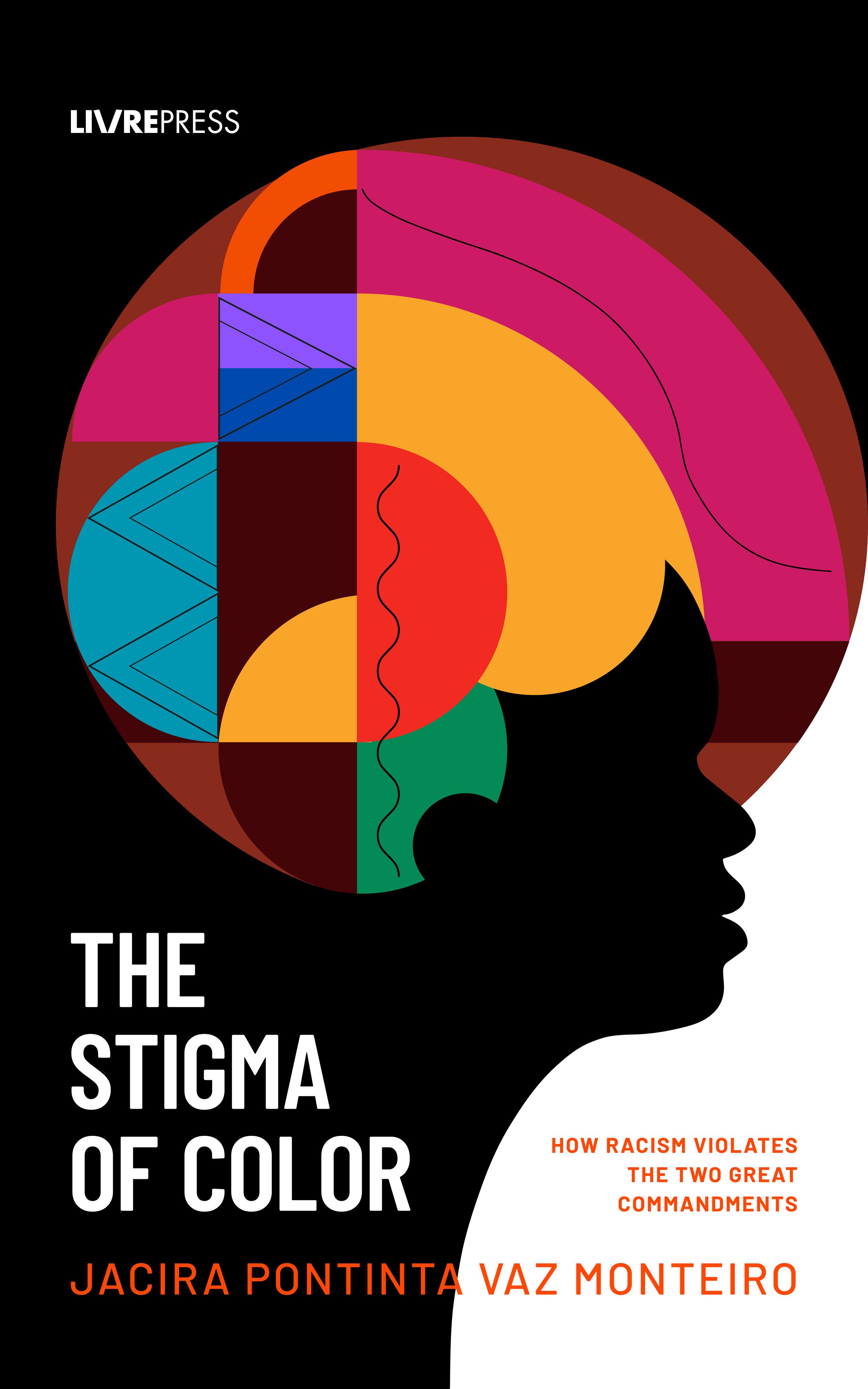
The Stigma of Color:
How Racism Violates the Two Great Commandments
US Launch · Juneteenth Campaign · June 2026
"Black lives matter because Christ said so — not because a social movement said so."
— Jacira Pontinta Monteiro, The Stigma of Color
Jacira Pontinta Monteiro is a Guinea-Bissau–born Brazilian author, theologian, and scholar whose work explores Christian faith, race, history, culture, and human dignity.
In The Stigma of Color, she brings a distinctly Brazilian perspective to a question that reaches across national and cultural boundaries: What does it mean to love our neighbor when prejudice has shaped the way we see—and sometimes fail to see—one another?
Published in English by LIVREPRESS USA, The Stigma of Color invites readers, churches, universities, and communities into a thoughtful conversation about racism, Scripture, historical memory, and the active defense of human dignity.

For interviews, podcasts, media coverage, church conversations, university events, book clubs, or speaking inquiries, please include your organization, proposed topic, preferred date, format, and contact information.
THE ENGLISH-LANGUAGE EDITION
The Stigma of Color: How Racism Violates the Two Great Commandments
A book for Christians seeking to understand the origins of racism, its continuing consequences, and the responsibility of the church to confront prejudice with truth, compassion, and intentional action.
Although Scripture affirms the inherent dignity of every human being as someone created in the image of God, Christian communities are not immune to the historical, cultural, and structural forces that sustain racial prejudice. Jacira Pontinta Monteiro examines this tension through biblical reflection, historical research, cultural observation, and lived experience.
Addressing slavery, colonialism, violence against women, resentment, indifference, social inequality, and the legacy of racial injustice, The Stigma of Color asks readers to move beyond merely denouncing racism. It calls them toward the active defense of human dignity—and toward a form of neighbor love that can be recognized in practice.
Book information
Title:The Stigma of Color: How Racism Violates the Two Great Commandments
Author: Jacira Pontinta Monteiro
Publisher: LIVREPRESS, Inc.
Original Language: Portuguese, Brazil
English Edition: Published by LIVREPRESS, Inc.
Launch Date: June 19, 2026
Formats: Paperback and eBook
Page Count: 153 pages
ISBN: 9798904173135
BISAC Codes: REL012120 · REL012110 · SOC031000
Print Price: $18.95
eBook Price: $12.95
Media Contact: Sandra Alex · sandra.alex@livrepress.com
Press Kit URL: https://www.livrepress.com/authors-jacira/presskit
WHY THIS BOOK MATTERS
A Brazilian Voice Enters the American Conversation
Conversations about race are usually shaped by the histories of individual nations. The American conversation carries the particular legacy of slavery, segregation, civil-rights struggles, and continuing racial inequality. Brazil’s history developed differently, yet it was also profoundly shaped by colonization, slavery, racial hierarchy, and the enduring mythology that proximity and cultural mixture had resolved the problem of racism.
Jacira’s perspective allows English-speaking readers to encounter these questions from beyond the familiar boundaries of the American debate. Her work reveals both the differences between Brazil and the United States and the moral questions the two countries share: Whose suffering is believed? Whose history is remembered? What happens when indifference is mistaken for neutrality? What does love of neighbor require when another person’s dignity is being denied?
The Stigma of Color does not offer political slogans or easy formulas. It invites honest examination—of history, society, Christian communities, and the human heart. Its argument is ultimately both theological and practical: love of God cannot be separated from the way human beings recognize, defend, and care for one another.
ABOUT THE AUTHOR
Jacira Pontinta Monteiro
Born in Guinea-Bissau, Jacira Pontinta Monteiro moved to Brazil with her family when she was seven years old. Her experience of living between African and Brazilian cultural realities has deeply informed her interest in history, identity, belonging, faith, and race.
Jacira holds a degree in Accounting Sciences from the Federal University of Paraíba and a master’s degree in Education, Art, and Cultural History from Mackenzie Presbyterian University. She also completed postgraduate studies in Biblical Theology and New Testament Exegesis.
Her academic research has examined slavery in nineteenth-century Brazil through historical accounting records, exploring how enslaved human beings were classified as property and recorded alongside other assets. This study contributed to her broader examination of how systems of dehumanization are constructed, normalized, and remembered.
Jacira is the author of O Estigma da Cor and Hiperconectados. Across her books, teaching, interviews, and public conversations, she considers how Christian faith speaks to contemporary cultural questions—including racism, inequality, technology, community, women’s experiences, and human dignity.
In The Stigma of Color, Jacira combines historical attention, biblical reflection, and personal insight to challenge both indifference and extremism. Her work calls readers toward a faith capable of listening carefully, confronting injustice honestly, and recognizing the image of God in every human being.
-
Jacira Pontinta Monteiro is a Guinea-Bissau–born Brazilian author and scholar whose work explores Christian faith, history, race, culture, and human dignity. She is the author of The Stigma of Color and Hiperconectados and holds a master’s degree in Education, Art, and Cultural History.
-
Jacira Pontinta Monteiro is a Guinea-Bissau–born Brazilian author and scholar whose work examines Christian faith, history, race, culture, and human dignity. She holds a degree in Accounting Sciences, a master’s degree in Education, Art, and Cultural History, and postgraduate training in Biblical Theology and New Testament Exegesis. Jacira is the author of The Stigma of Color and Hiperconectados. Through historical research, biblical reflection, and cultural observation, she invites readers to confront prejudice without surrendering compassion, conviction, or the responsibility to recognize and defend the dignity of every human being.
-
Born in Guinea-Bissau, Jacira Pontinta Monteiro moved to Brazil with her family when she was seven years old. Her experience of living between African and Brazilian cultural realities has deeply informed her interest in history, identity, belonging, faith, and race.
Jacira holds a degree in Accounting Sciences from the Federal University of Paraíba and a master’s degree in Education, Art, and Cultural History from Mackenzie Presbyterian University. She also completed postgraduate studies in Biblical Theology and New Testament Exegesis.
Her academic research has examined slavery in nineteenth-century Brazil through historical accounting records, exploring how enslaved human beings were classified as property and recorded alongside other assets. This study contributed to her broader examination of how systems of dehumanization are constructed, normalized, and remembered.
Jacira is the author of O Estigma da Cor and Hiperconectados. Across her books, teaching, interviews, and public conversations, she considers how Christian faith speaks to contemporary cultural questions—including racism, inequality, technology, community, women’s experiences, and human dignity.
In The Stigma of Color, Jacira combines historical attention, biblical reflection, and personal insight to challenge both indifference and extremism. Her work calls readers toward a faith capable of listening carefully, confronting injustice honestly, and recognizing the image of God in every human being.
INTERVIEWS & CONVERSATIONS
Suggested Topics:
How Racism Violates the Two Great Commandments
Why love of God and love of neighbor cannot be separated from the way Christians understand race, prejudice, and human dignity.
What America Can Learn from Brazil’s Conversation About Race
The important historical differences—and revealing similarities—between racism in Brazil and the United States.
When Indifference Becomes a Moral Choice
Why refusing to recognize another person’s suffering is not neutrality, and how listening can become an ethical and spiritual responsibility.
Racism Within Christian Communities
Why churches may resist conversations about race and how faith communities can approach the subject with honesty, humility, and biblical integrity.
Slavery, Memory, and the Stories Nations Tell
How historical records reveal the dehumanization of enslaved people and why the way societies remember slavery continues to matter.
Black Women, Faith, and Cultural Expectations
How race, gender, work, economic necessity, and imported ideals of Christian womanhood intersect within Brazilian life.
Avoiding Indifference Without Embracing Extremism
How conviction, compassion, justice, reconciliation, and accountability can exist within the same conversation.
Translation as Cultural Bridge-Building
What changes when a Brazilian book about race, faith, and dignity enters the English-speaking world.
AT A GLANCE
Central Ideas from The Stigma of Color
Every human being possesses inherent dignity as someone created in the image of God.
Racism is not only a social or political problem. It is also a moral and spiritual failure.
Loving one’s neighbor requires more than the absence of personal hostility. It requires attention, empathy, truth, and action.
Condemning racism in principle is insufficient when indifference allows racial harm to continue.
Brazil and the United States have different racial histories, but both must confront the enduring consequences of slavery and dehumanization.
Historical understanding helps readers recognize how injustice can become embedded in institutions, habits, language, and collective memory.
Christian communities should be able to confront racism without reducing the conversation to partisanship or ideological extremes.
Reconciliation cannot be built by avoiding truth. It begins with honest recognition of suffering, responsibility, and shared human dignity
The Church’s historical complicity in slavery — and its path to accountability
The exclusion of Black women from dominant models of biblical femininity
The “Cain Syndrome”: indifference toward the suffering of one's neighbor
The missional life as the Church's most powerful response to racism
Practical recommendations for churches seeking racial reconciliation
“Her text expresses a profound cry for justice—a justice that comes from the heart of God, who intimately knows injustice, indifference, and oppression.”
“Sister Jacira is a blessing to the Brazilian Church, and her book is a must-read on the topic of racism within the church.”
“Since the time of Florestan Fernandes, awareness of the reality of Brazilian racism has been slowly building, but recent years have seen notable progress in this regard. In the evangelical environment, however, this awareness is still very tenuous; which makes Jacira’s book genuinely good news!”
DOWNLOADABLE MATERIALS
All assets are available for download. Please contact us if a link has expired or a file format is needed.
📄 Press Release - The Stigma of Color (PDF)
🖼️ Book Cover High-resolution(PNG)
📸 Author’s Picture (JPEG)
📦 Complete Press Kit (ZIP)
LINKS AND RESOURCES:
Substack article — LIVREPRESS
Book page
Author’s page on the LIVREPRESS site: